Showing posts with label leachate pollution. Show all posts

Saturday, November 09, 2013

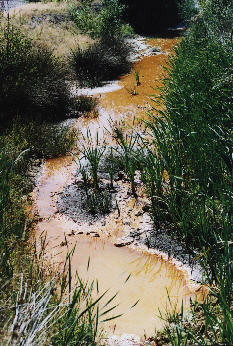
How Would You Recognize Leachate Pollution If You Saw It?


Some types of leachate are immediately recognizable by their smell, but that isn't always true and others and much harder to distinguish from the low levels of pollution from septic tanks, and the presence of animals living on the land or nearby.

Steve Last, (Principal of IPPTS Associates) has published an article about the 3 most important indicator substances for the diagnosis of the presence of leachate contamination in soil or river/ stream water, which provides a handy guide to the first steps which might help identify a leachate pollution problem when leachate escapes from a landfill.

Don't stop here if you have an interest in this subject, visit the following link to the leachate expert website.

Thursday, September 01, 2011

3 Symptons Which Could Be Caused By Leachate Pollution And Are Worth Looking Out For

It is almost always the case that a problem like leachate pollution can easily be diagnosed and solved by matching the symptoms that you see, to a known problem. In fact that's what a medical doctor spends his time doing every time he interviews a patient. However, the technique isn't just limited to the practise of medicine, it works for all sorts of problems. That is why we have written this article to help you understand what the symptoms of leachate pollution are.

So, before we go any further, here are the three symptoms often experienced when quite severe leachate pollution occurs in a river or stream occurs as the river or stream passes a landfill. 

Sympton No. 1 is the disappearance of the normal water-life. The first to be lost will be fish which can no longer live due to a depletion of oxygen in the water.

Sympton No. 2, which is often seen in such circumstanes is that if flow is quite slow the surface of the water may have a sheen of colour which looks almost like the rainbow colours of oil floating on water. However, if leachate is the cause instead of a flexible coating, this colourful surface layer can be cracked and dispersed by agitating it.

This most often occurs when a high concentration of dissolved iron is leaking into the watercourse, in the leachate.

Sympton No. 3: The final symptom in these cases is that if a water quality sample is taken and the concentration of ammonia is analysed the ammonia will have risen, alongside other contaminants as well, during the passage of the stream or river past the landfill.

This happens when the rain which fell on the landfill decomposes in the landfil, producing high concentrations of ammonia which are very damaging to wildlife if it gets into watercourses.

If you have seen these symptoms of leachate pollution you are lucky, as you now know the diagnosis of the problem of leachate pollution, and knowing the problem is the first, and often the most difficult part of identifying and successfully applying a solution.

Congratulations, you have now found out what is causing these symptoms and the cause of the  problem. Don't stop now. There are many ways in which you can now find the solution to this problem. One method which is used, is to use the internet and continue by using a search engine to identify a website with the solution to this problem, but there are many other solutions such as asking an expert you know, or visiting a library.

Whichever method you use, we wish you a successful search for the solution you seek.

Discover tips on how to prevent leachate pollution at the leachate management site at leachate.co.uk.

Friday, January 12, 2007

Swansea Firm Fined for Waste Offences

We all realise the importance of controlling leachate to prevent pollution. This UK Environment Agency web site News item shows that they will certianly prosecute if companies do not heed this requirement suitably.

B.J. Landholdings Ltd. of Plasmarl, Swansea have been fined a total of £2,000 by Swansea Magistrates (13.12.06) after pleading guilty to charges brought under Section 33 of The Environmental Protection Act 1990. The company was also ordered to pay full costs of £610 to Environment Agency Wales, who brought the prosecution.

The company holds a waste management licence for a closed landfill site at Penplas, Llangyfelach, Swansea. The site operated in the 1980’s, accepting building waste. It has now been restored to agriculture.

On two separate occasions this year, Environment Agency officers found contaminated water, known as leachate, leaking from the site into an nearby drainage ditch. The leaks appeared to be have been caused as a result of a build up of leachate within the site. It is the company’s responsibility to carry out regular maintenance and monitoring at the site, to ensure that it does not pollute the environment. In this case, the company should have been checking the leachate levels and removing it as required.

Following each incident, temporary repairs were carried out to the structure of the landfill, and excess leachate was removed from the site.

Magistrates were told that in an effort to provide a permanent solution to the problems, B.J. Landholdings Ltd are planning to install a leachate treatment system at the site; it is hoped that construction will start early in 2007. It is estimated that the proposed system will cost the company in excess of £60,000.

Speaking after the court hearing, Daron Herbert, Agency Environment Management Team Leader for the Swansea area, said:
Whilst the environmental impact of these particular incidents was relatively
minor, there remains the potential for a much more serious pollution incident if
standards of maintenance at the site are not improved. We are continuing to work
with the company to ensure the problem does not reoccur.
Leachate Blogger comment: This successful prosecution shows that the Environment Agency will not hesitate to take enforcement action against companies or individuals who fail to fulfil their responsibilities and so cause pollution to the environment.

However, it is quite common for closed landfills where monitoring has not been thought necessary, that there may be a gradually rising leachate level as the waste reaches absorbtive capacity over a long period. It can be easy to be caught out by this effect.